
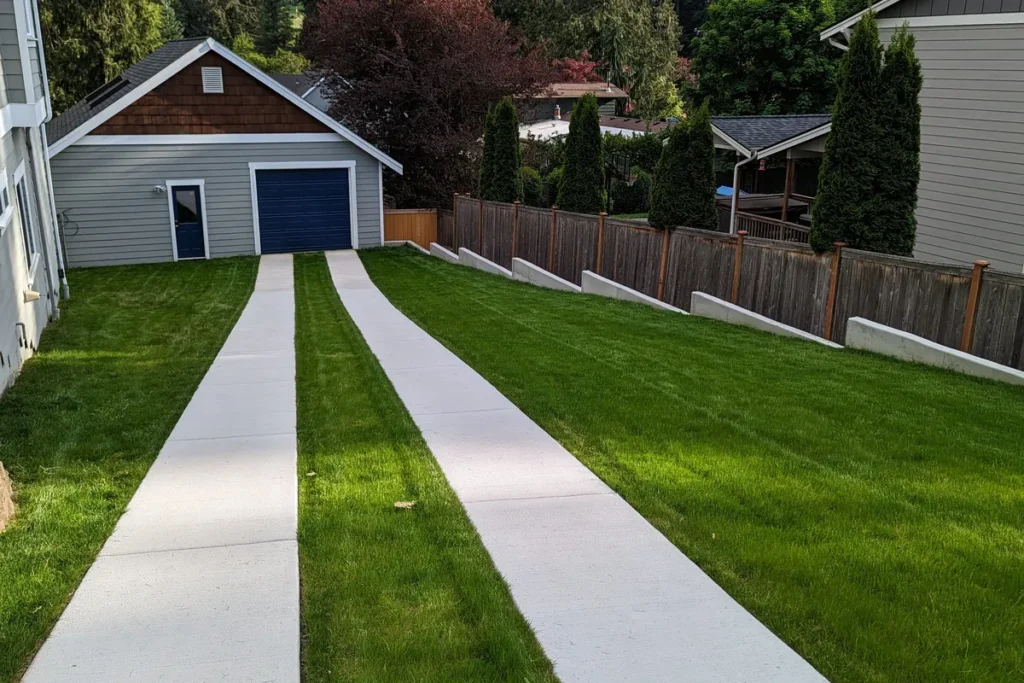
Fall in the Pacific Northwest brings cooler temperatures, shorter days, and consistent rainfall that transform how your lawn behaves. For homeowners seeking professional lawn care in Shoreline and the surrounding communities, this season presents both opportunities and challenges for maintaining healthy, resilient turf. The clay-heavy soils common to our region, combined with increased moisture and reduced sunlight, create conditions that demand a different approach than summer maintenance.
Our cool-season grasses thrive during fall, making it the ideal time to strengthen root systems, address compaction, and prepare your yard for dormant months ahead. Neglecting essential fall tasks can lead to moss invasion, poor drainage, and a weak lawn come spring. Understanding what your turf needs right now will pay dividends throughout the year.
Professional lawn care services for fall aeration and overseeding
Compacted soil is one of the most common issues we encounter in residential properties throughout the region. Heavy foot traffic, clay content, and seasonal rains all contribute to compaction, which prevents water, oxygen, and nutrients from reaching grass roots. Fall aeration breaks up that compacted layer, creating channels that allow your lawn to breathe and absorb what it needs.
Overseeding right after aeration fills in thin or bare spots with fresh grass seed. The combination of loosened soil, moderate temperatures, and natural rainfall creates perfect germination conditions. We typically recommend pairing these services in September or early October, before temperatures drop too low for seed establishment. A dense, healthy lawn also crowds out weeds and moss, reducing future maintenance headaches.
Managing moss and drainage challenges
Moss thrives in the exact conditions our area offers during fall and winter. Shade, moisture, acidic soil, and compacted ground create an environment where moss outcompetes grass. While moss itself isn’t harmful, it signals underlying problems that will weaken your lawn over time.
Surface treatments alone won’t solve persistent moss problems. Improving drainage through aeration, adjusting soil pH with lime applications, and pruning back overhanging branches to increase sunlight all help shift the balance back in favor of grass. If your property struggles with standing water or persistent wet spots, we can assess grading options that prevent long-term damage.
Addressing root causes of moss growth
Beyond immediate treatments, evaluating your yard’s overall conditions helps prevent moss from returning season after season. Our lawn care services are designed to tackle these regional challenges head-on, addressing compaction, drainage, and soil health as integrated solutions rather than isolated fixes.
Fall fertilization for root development
Your lawn doesn’t stop growing in fall; it shifts its energy underground. While blade growth slows, root systems continue to expand and store nutrients that will fuel spring green-up. A fall-specific fertilizer, higher in potassium and lower in nitrogen than summer blends, supports this root development without pushing excessive top growth that would be vulnerable to winter stress.
Timing matters. Applying fertilizer too early can encourage tender new growth that won’t harden off before frost. Too late, and your grass won’t absorb the nutrients before going dormant. We typically fertilize in late October or early November, after the last mowing but while grass is still actively photosynthesizing. This window maximizes uptake and prepares your lawn for the months ahead.
Adjusting your mowing routine before winter
As daylight decreases and temperatures drop, grass growth slows significantly. Your mowing frequency should reflect this change. While you may have mowed weekly through summer, fall often requires mowing every ten days to two weeks, depending on weather and growth patterns.
Blade height also deserves attention. Cutting too short weakens grass and exposes soil to weed seeds and moss spores. Cutting too long leaves blades susceptible to matting under wet leaves or snow. We recommend maintaining a height around two and a half to three inches through fall, then dropping slightly for the final mow of the season to prevent matting without scalping.
Your last mow should happen once growth has essentially stopped, usually in late November. Remove any remaining leaves or debris at this time to prevent smothering and disease development over winter.
Preparing for heavy rainfall and winter weather
Our region’s fall and winter rains can deliver several inches of precipitation in a matter of days. Lawns that aren’t properly prepared face erosion, puddling, and root rot. Beyond aeration, consider these steps:
- Clear gutters and downspouts to direct water away from lawn areas
- Rake and remove fallen leaves regularly to prevent smothering and fungal issues
- Avoid walking on saturated turf, which worsens compaction
- Monitor low-lying areas for standing water that may require drainage improvements
If you notice persistent drainage problems, addressing them now prevents more serious damage during the wettest months. Our team can evaluate your property and recommend solutions tailored to your yard’s specific topography and soil conditions.
Keeping your property healthy and professionally maintained through fall doesn’t require hours of your own time. Our residential services handle everything from aeration and fertilization to ongoing seasonal maintenance. Request a quote today and let us prepare your outdoor space for whatever the season brings.