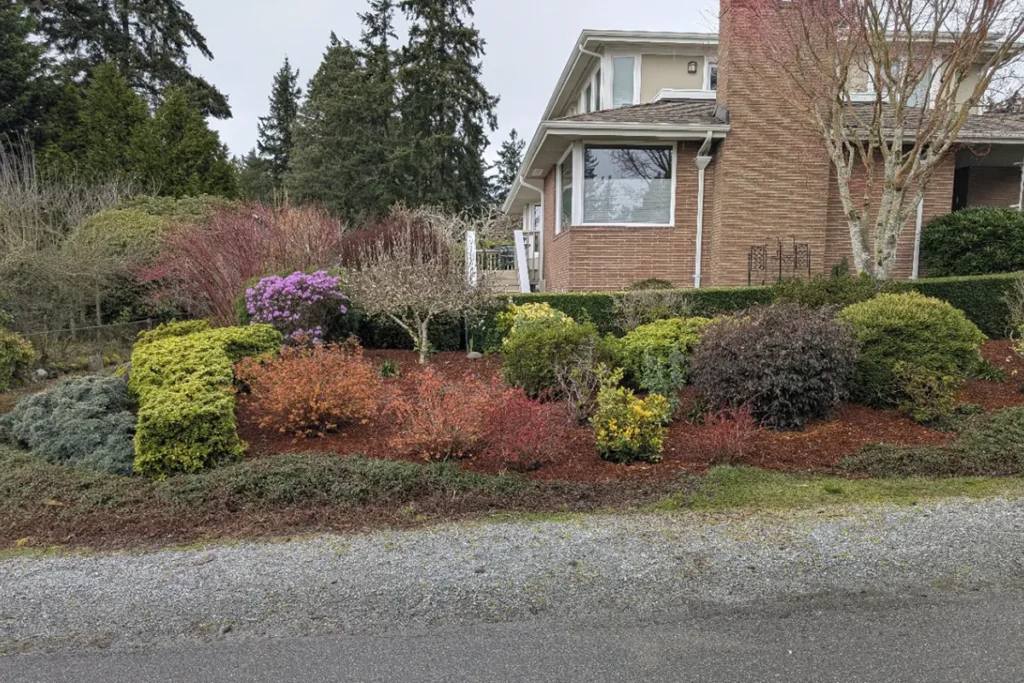
Before breaking ground on landscape construction projects in Shoreline, it is necessary to evaluate the soil, drainage, compaction, and overall growing conditions beneath the surface. Correcting drainage problems, improving compacted soil through thatching and aeration, and creating an appropriate fertilization plan before or alongside installation gives lawns, planting beds, and other landscape features a stronger foundation for long-term performance.
Western Washington’s wet climate makes these issues especially important. Prolonged rainfall reveals where water pools, how soil compacts under pressure, and which areas need intervention before installing hardscapes, lawns, or planting beds. Addressing these conditions early helps protect the investment in the landscape and gives new plantings and turf a better opportunity to establish successfully.
How To Prepare Soil and Drainage Before Landscape Construction?
Proper landscape installation begins with understanding and addressing the underlying soil and drainage conditions on your property. Without these foundational steps, new features and plantings can struggle to thrive or cause ongoing maintenance challenges. Ensuring drainage, healthy soil structure, and appropriate grading creates a stable environment that supports sustainable growth and protects hardscape elements from damage over time.
Step 1: Correct poor drainage before installing new landscape features
One of the most frequent issues encountered is inadequate drainage. When water pools in low spots after rain, it can indicate that the soil is not absorbing moisture or that the existing grade is directing runoff toward structures or other vulnerable areas.
Standing water contributes to root problems, erosion, saturated planting beds, and unstable conditions beneath patios, pathways, and other hardscape features.
Depending on the site, solutions may include regrading, improving soil infiltration, installing drainage systems, or incorporating permeable materials that allow moisture to move through the landscape effectively.
Correcting drainage before construction is considerably easier than trying to solve persistent water problems after new landscaping has been installed.
Step 2: Use thatching and aeration to relieve compacted soil
Compacted soil is one of the most common reasons lawns and planted areas struggle, particularly on properties that have experienced regular foot traffic, equipment use, previous construction, or years of soil compression.
Compaction reduces the open pore space that normally allows water, oxygen, and nutrients to move through the soil. When those spaces become compressed, roots have difficulty expanding, water may remain on the surface, and fertilizer cannot perform as effectively because the root system itself is restricted.
Thatching and aeration can play an important role in correcting these conditions.
Thatching removes accumulated dead grass and organic material that prevents moisture and nutrients from penetrating the soil. Aeration addresses compaction by creating openings in the soil, improving the movement of air and water into the root zone.
For established lawns in Shoreline, combining lawn thatching, aeration, and overseeding can be especially useful when turf has become thin, compacted, or slow to recover.
Where compaction is significant, mechanical aeration may be combined with soil amendments, overseeding, or other improvements to restore healthier growing conditions.
Addressing compaction before completing landscape improvements gives turf and planting areas a better foundation than relying on additional watering or increased fertilizer.
Step 3: Build fertilization into the soil improvement plan
Fertilization is most effective when it is based on what the soil and plants actually need. Applying fertilizer to compacted, poorly drained, or nutritionally imbalanced soil without correcting the underlying condition can produce disappointing results.
Before recommending fertilizer, consider existing soil quality, plant material, lawn condition, drainage, and the time of year. Where appropriate, soil testing identifies pH conditions (acidity) or nutrient deficiencies that should be addressed.
For lawns, proper fertilization supports stronger root growth, more consistent color, and recovery from seasonal stress. However, timing matters. Fertilization should complement active growth and soil improvement rather than simply adding nutrients regardless of site conditions. In fact, over-fertilizing a lawn contributes to thatch buildup.
Aeration improves the effectiveness of a lawn fertilization program because water and nutrients have better access to the root zone after compacted soil has been opened.
In planting beds, adding compost, organic matter, or other amendments can improve soil structure while supporting the nutrient needs of new or existing plants. The goal is not to apply more fertilizer, but to create soil conditions in which plants can actually use the available nutrients.
Step 4: Evaluate slopes for erosion and soil movement
Slopes influence how quickly water moves, where soil settles, and whether installed materials remain stable over time. An incline that appears manageable during dry weather can behave very differently after extended periods of rain.
Before building or planting on a slope, assess its grade, soil conditions, existing vegetation, and water movement. Depending on the property, the solution may involve adjusting the grade, creating terraces, improving drainage, stabilizing planting areas, or incorporating retaining features.
Improving soil structure is also important on slopes. Healthy vegetation with established root systems can contribute to soil stability, which makes proper soil preparation, planting, and ongoing nutrient management part of a broader erosion-control strategy.
Step 5: Address nutrient-depleted or poor-quality soil before planting
Not all soil problems are structural. Soil can become depleted over time, disturbed during previous construction, mixed with debris, or left with insufficient organic matter to support healthy plant growth.
Installing new plants without addressing these conditions can lead to weak establishment, poor growth, and greater maintenance requirements.
Assess existing soil before plant installation or amendments. Depending on the condition of the site, improvements may include adding compost or organic material, correcting pH when necessary, improving drainage, or replacing unsuitable soil.
Fertilization may be part of this process, but it works best as one component of an overall soil management plan. Good soil structure, proper moisture levels, adequate organic matter, and the right nutrient balance work together to support long-term plant health.
This is particularly important for residential landscaping, where lawns, garden beds, shrubs, and trees need to remain healthy well after the initial installation.
Step 6: Identify roots and underground obstacles before excavation
Before breaking ground, it’s necessary to identify potential obstacles below the surface. Tree roots, irrigation lines, buried debris, drainage components, and utility lines can all affect excavation, grading, and installation.
Major tree roots require particular attention because unnecessary root damage can affect tree health and stability. Existing irrigation may need to be rerouted, while buried materials from previous landscaping or construction work can change excavation plans.
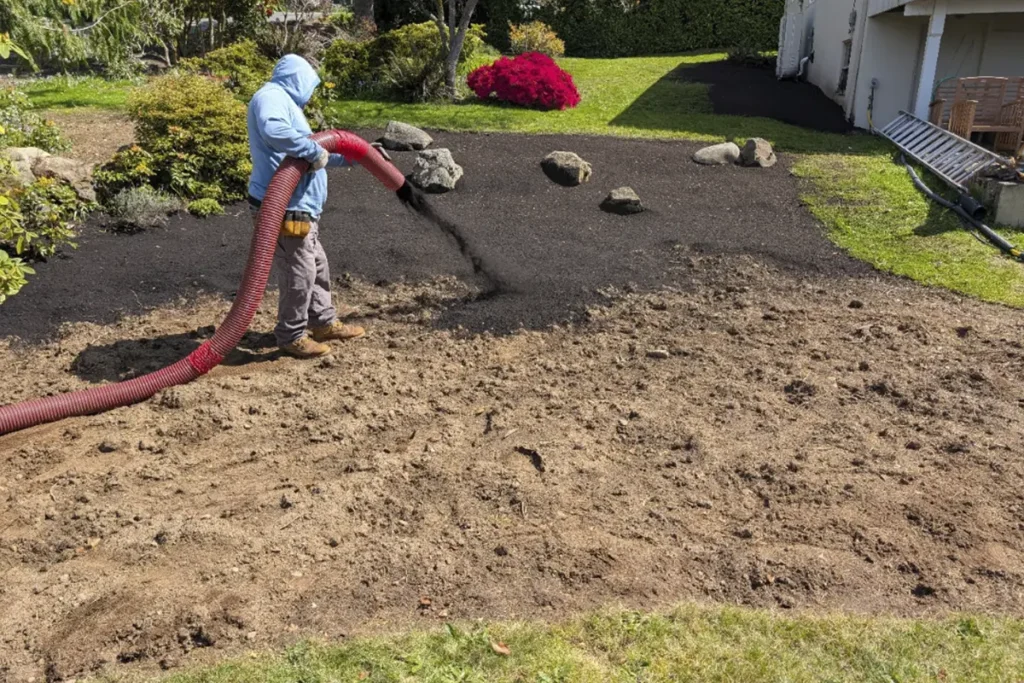
Site access matters as well. Narrow gates, steep grades, limited entry points, and existing landscape features influence which equipment can be used and how soil, mulch, plants, and construction materials are brought onto the property.
A thorough site assessment allows planning around these conditions before work begins rather than discovering them after construction is underway.
Prepare Your Shoreline Property for Landscape Construction
A successful landscape starts with conditions below the surface. By addressing drainage, soil compaction, thatching, aeration, fertilization, grading, and soil quality before problems become established, landscapes perform better in Shoreline’s wet winters and are healthier systems overall.
If you are planning a landscape project or your existing lawn is struggling with compaction, thatch buildup, poor drainage, or nutrient deficiencies, Ballinger Landscaping can help evaluate the property and recommend the right combination of site preparation, aeration, fertilization, and landscape improvements. Contact us to schedule an evaluation and build a healthier foundation for your outdoor space.